AK Design Collaboratory
A space for experiential learning that incorporates shared visions, collaborative design, and sustainable solutions rooted in Arctic community wisdom. Together, we imagine what home, resilience, and the future can look like in the North.
-
![]()
Arctic Entryways
-
![]()
Designing an Alternative Building Material for Alaska Homes
-
![]()
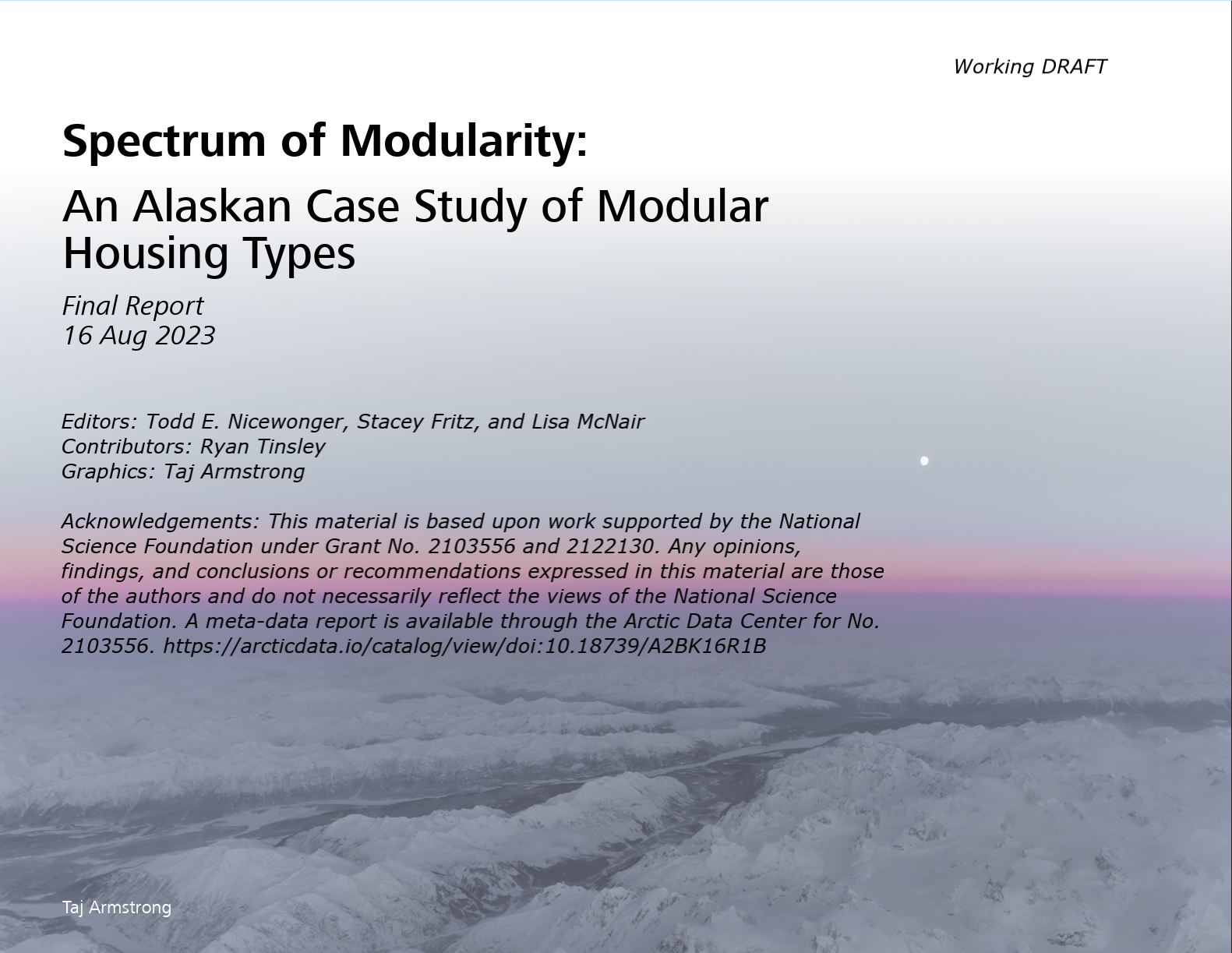
Spectrum of Modularity
-
![]()
Complexities in Alaskan Housing
-
![]()
AR Sandbox
PROJECTS
-
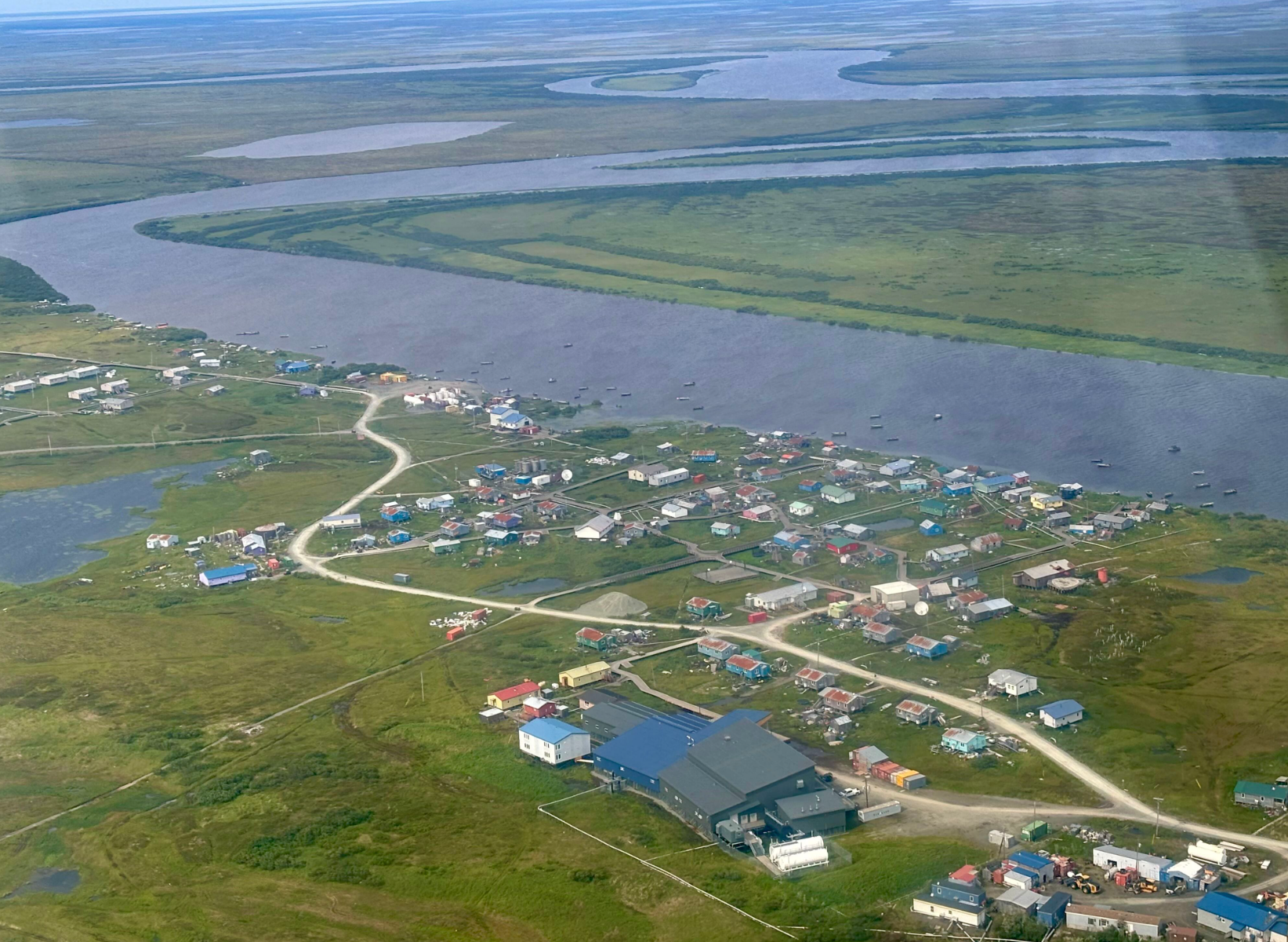
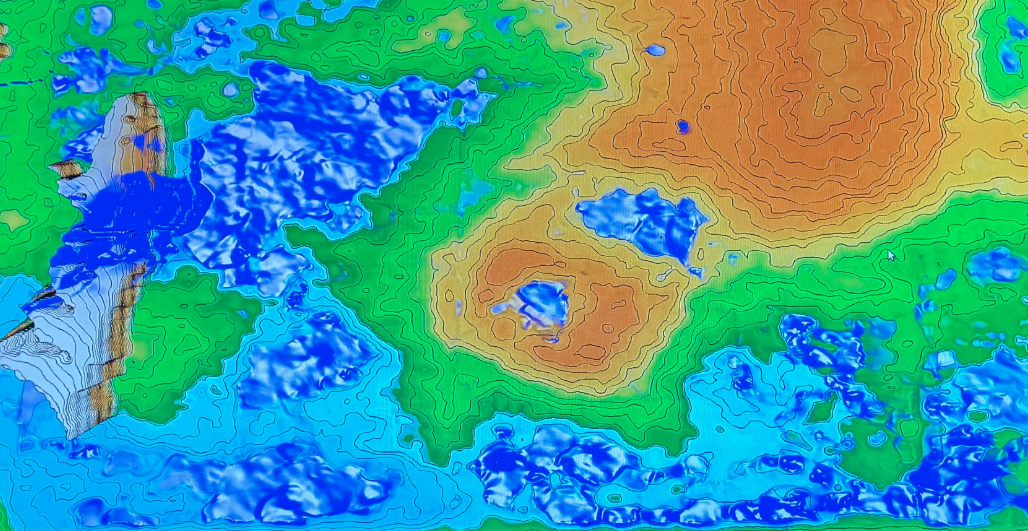
Portland State University is co-developing an interactive tool that combines a scenario-based role-playing board game and an AR Sandbox to support relocation planning in remote Alaska Native communities. These communities face critical infrastructure threats, including rising sea levels, erosion, flooding, and ground subsidence caused by permafrost thaw. Developed in close collaboration with Alaskan stakeholders, the tool is designed to foster dialogues about climate resilience and food sovereignty, support community-based decision-making, and honor Indigenous knowledge and local leadership systems in rural Alaska
-
This annotated bibliography project presents a collection of scholarly resources on infrastructural design processes, as well as the history and socio-cultural issues facing Northern communities. The diversity of the studies incorporated in this project reflects the complexity of the sociocultural and environmental contexts that are shaping research activities in the region, along with challenges of planning infrastructural projects, including relocation planning. More than 30 reports, articles, and chapters have been organized thematically into seven sections, ranging from methodological debates on co-design to the co-production of data infrastructures. The project’s aim is to outline the region's political and cultural histories and its unique environmental conditions, serving as a resource for current and future researchers working in the North alongside Alaska Native Communities on infrastructural projects.
-
Arctic Entryways:
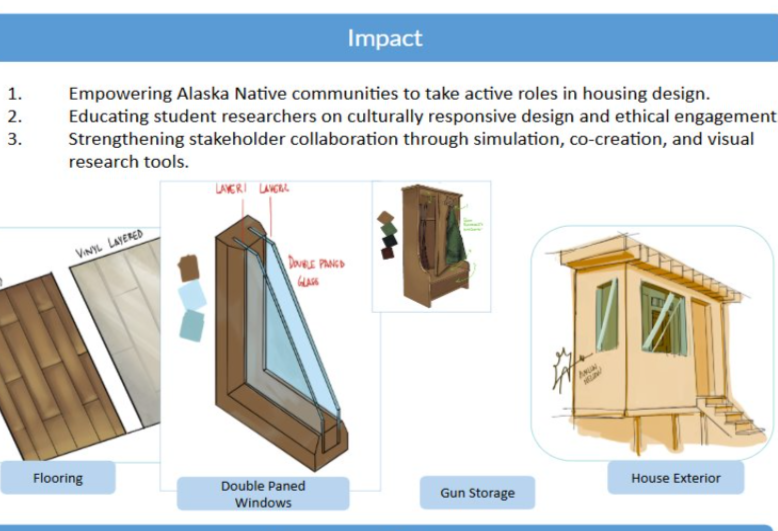
This project centers on creating a feedback tool to gather insights from Alaskan residents about the role and design of Arctic entryways. These transitional spaces protect homes from severe cold, reduce heat loss, and provide practical storage. By engaging local voices, the project ensures that if an entryway is built, it reflects the lived experiences, cultural values, and specific needs of those who call Alaska home. This project ws led by students in Virginia Tech’s IDPro program, working closely with community partners and mentors to prioritize meaningful, user-driven design. Low-fidelity prototypes were essential for facilitating early, collaborative exploration, allowing community members to engage directly with preliminary design concepts, express priorities, and refine spatial and functional ideas before advancing to higher-resolution models.
Designing an Alternative Building Material for Alaska Homes:
The IDPro team’s Designing an Alternative Building Material for Alaska Homes project develops a lightweight, modular building system suited for Arctic conditions. Using natural cellulose insulation and a foldable outer shell concept, the team analyzed thermal performance, created structural models, and developed a catalog of implementation strategies. The project integrates engineering research with community-centered design to support sustainable, locally responsive housing solutions in Alaska.
-
This project involves creating an interactive scenario-building game that explores the setup of staging areas for housing construction projects in remote Alaskan communities that are relocating due to the impacts of climate change. The game will help participants understand the logistical, environmental, and operational considerations involved in constructing 5, 20, or 50 homes under challenging conditions
-
-
Examines media coverage of the storm’s impact on Alaska Native communities, focusing on systemic policy gaps contributing to their housing crisis and the cultural implications of housing insecurity. The project aims to enhance understanding of sociopolitical issues affecting relocation planning and explores the trauma associated with the region's unique environmental vulnerabilities. It will compile sources into an annotated bibliography with visuals.
-
Designed to help navigate the complex network of home funding, design, construction, and maintenance in Alaska’s remote Yukon-Kuskokwim Delta region. In addition to housing resources, the project includes an alphabetized regional directory for the 48 communities in the YK Delta with contact information for entities in each. The 2026 guide will serve as a small-scale prototype of a larger, updateable online resource, which will be refined with Alaskan stakeholders. Printed copies will be distributed to communities and stakeholders.
THE REASEARCH LEADS
-
Lisa D. McNair is interim Co-Executive Director at the Institute for Creativity, Arts and Technology (ICAT) and Professor of Engineering Education at Virginia Tech. She is an Executive Committee member of a2ru and Editorial Board member of Ground Works journal. Her research and teaching interests include developing interdisciplinary learning experiences that are research-informed, building networks between the university and industry and community sectors, and expanding engagement in science, engineering, arts, and design. McNair’s interdisciplinary experience and research, as well as expertise in qualitative data collection and analysis, are directly related to this project’s plans to develop an arts-integrated model of innovation that can be applied in a range of settings.
Contact: lmcnair@vt.edu
-
Todd Ferry is an architect, educator, and researcher known for his pioneering contributions to public interest design. He serves as a Senior Researcher at Portland State University’s Center for Public Interest Design, where he previously spent over a decade as Associate Director developing innovative programs focused on alternative shelter, mobile placemaking, and community visioning. In addition, he is the Studio Director at Pendulum Architects, leading the firm’s Mid-Atlantic projects that span from stadium architecture to off-grid housing solutions. Ferry holds a Master of Architecture from the University of Texas at Austin and a Bachelor of Arts in Philosophy from the University of Georgia.
Contact: rtferry@gmail.com
-
Todd E. Nicewonger holds a Ph.D. in Applied Anthropology from Columbia University, an M.Ed. in Anthropology and Education from Teachers College, Columbia University, and an M.A. in Adult, Occupational, and Continuing Education from Kansas State University. His research focuses on the cultural practices of makers and growers, examining how these practices relate to broader socio-political issues. Since 2020, he has been conducting ethnographic research on housing insecurity in Alaska. Additionally, he actively participates in transdisciplinary projects within academia, exploring how tools from the arts can promote innovative research and collaborative learning.
Contact: toddn@vt.edu
THE COMMUNITY RESEARCH ASSISTANTS
-
Stacey Fritz, PhD, is a longtime Fairbanks resident and an applied anthropologist of arctic infrastructure. Previously with the Cold Climate Housing Research Center and National Renewable Energy Laboratory (NREL) Alaska Campus, Stacey now manages Alaska Adaptable Housing and works to advance sustainable housing for northern residents. Stacey conducts housing security research, infuses social science insights into Ryan’s innovative building projects, and helps navigate remote Arctic logistic challenges. She is experienced in facilitating tribal consultation, outreach to communities, sociocultural impact and environmental justice analyses, and mitigating impacts of industrial development. Her doctoral thesis at the University of Alaska Fairbanks traced the legacies of the DEW Line in the western Arctic, she spent a decade working in public land management in the Arctic, and she contributes to articles and other publications. Contact: Stacey@AKAdaptable.com
-
Jerilyn Kelly is a consultant for this project and will work closely with the research team to integrate storytelling practices into the workshop design. As a lifelong resident of rural Alaska, Yup'ik is her first language. She aims to enhance accessibility and inclusion in this project by incorporating Indigenous knowledge and the values taught to her by local elders in her community. Additionally, Kelly has been actively involved with the local municipal government since 2013 and has served as the mayor of Quinhagak since 2015. Recently, she received the Municipal Official of the Year Award from the Alaska Municipal League, which recognizes her exceptional leadership. This recognition underscores her extensive experience in communicating scientific and technical information to tribal members in her community and throughout Alaska.
-
-
Ryan Tinsley is a lifelong Alaskan who grew up in the trades and has over 35 years of experience in commercial and residential construction (ground to finish) and building maintenance with expertise in extreme climate construction techniques. He’s a problem solver and innovator known for artistic design and aesthetics, functionality, building innovation, and customer satisfaction. He previously worked as a research technician at the National Renewable Energy Laboratory (NREL) Alaska Campus and as a Building Educator at the Cold Climate Housing Research Center. Ryan’s the innovator of the Adaptable building system and some of his other past projects can be seen in an online portfolio. Since 2023, Ryan has been building system innovator at Alaska Adaptable Housing.
Contact: Ryan@AKAdaptable.com
-
Gundy Cloud is a Community Research Assistant on this project and was born and raised in Unalakleet, Alaska, where she still lives. She is committed to improving housing conditions in her community, particularly by addressing the health impacts of mold in homes. Through this work, she gathers community stories and collaborates with experts to identify practical mold mitigation strategies and inform future housing and relocation planning. Her contributions help ensure healthier homes for current and future generations. Outside of the project, she participates in subsistence practices, is active in her church, and recently handcrafted a pair of mukluks with a Iñupiat design for her granddaughter’s high school graduation.
COLLABORATORY PROJECT TEAMS
-
Emily Vasquez: is a Biomedical Science student and researcher at Virginia Tech focused on sustainable housing and community resilience through the AK Design Collaboratory. She helped design and build the Collaboratory’s website and contributed to the Arctic Entryways project with Virginia Tech’s IDPro team. Currently, she mentors the new Arctic IDPro team for Fall 2025. As Director of Public Relations for the Quality of Life Plus (QL+) Student Chapter, Emily leads outreach and design efforts that develop custom assistive technologies improving the quality of life for individuals with physical challenges.
Contact information: vemily@vt.edu
Ananya Agrawal: is a junior in Materials Science and Engineering. She contributed to the Arctic Entryways project by researching materials suitable for filling and insulating structural gaps. She also explored and prototyped storage solutions for the compact entryway, ensuring that the design preserved the cultural significance of the space. In addition, she investigated construction methods used in regions with melting permafrost to inform resilient design strategies.
Contact Information: ananyaa@vt.edu
Doreen Eleki: is a Mechanical Engineering student at Virginia Tech exploring sustainable design, material innovation, and human-centered design and engineering. As part of the Arctic Housing project, she researched alternative construction materials for extreme-climate homes and contributed to early design concepts supporting energy efficiency and cultural needs in Alaska Native communities. She focused on developing a framework for the catalog being made to showcase the different ways the alternative material could be put together. She is invested in developing things that align directly to human needs.
Contact Information: edoreen24@vt.edu
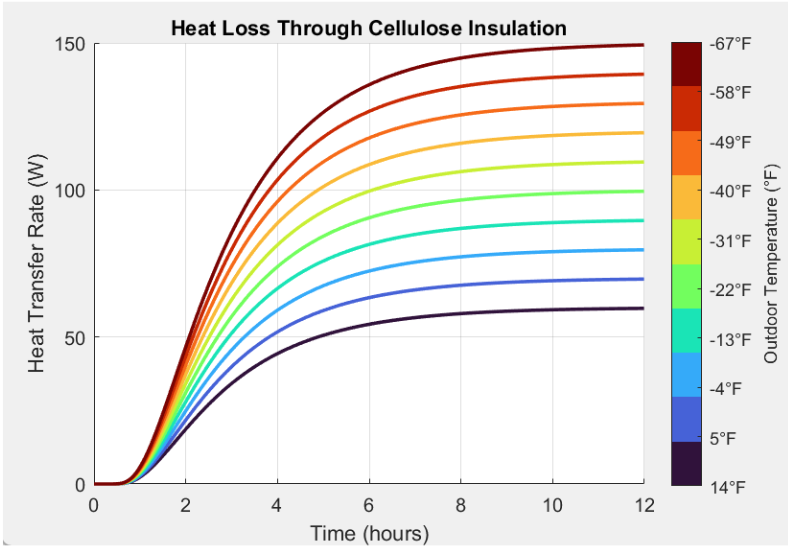
Adonai Yohannes is a junior in Mechanical Engineering. His contribution to the Arctic group consists of thermal analysis of a proposed cellulose insulation for the interior of the alternative building material. This includes a physical mockup demonstrating how the insulation material would be implemented and a data-driven graph showing how heat transfer would change over time with varying outdoor temperatures.Contact Information: adonai@vt.edu
Madison Berkson is a Mechanical Engineering student at Virginia Tech. She served as the project manager for the Alternative Building Material project. In addition to administrative duties, she came up with the project concept, drew the preliminary design sketches, and constructed the rapid prototype. Inspiring the project, she researched the current structural, material, and economic challenges concerning the natives' domestic infrastructure caused by the extreme climate conditions.
Contact Information: maddie22@vt.edu
Tomas O’Rourke Murolo: is a Research Assistant at Virginia Tech. With a background in History, Anthropology and Rhetoric, his work examines colonialism as a relational dynamic, through the lenses of space-place, materialities and aesthetics. He’s currently pursuing a PhD researching the colonial impact of material extraction and the transformation of space in mountain communities.
-
Sergio Palleroni: Professor and director of the Center for Public Interest Design at Portland State University
Contact: sergiop@pdx.edu
Ron Janus Acob: Ron Acob is an M.ARCH student at Portland State University and the Outreach and Engagement Designer Center for Public Interest Design Design Corps Fellow. Ron graduated from his Bachelor of Science in Architecture in 2023 and has served as a Design Corps Fellow. He is also an editor with the Design for the Common Good Network. Ron’s work focuses on leading efforts related to the research, development, demonstration, and dissemination of Indigenous wisdom that can inform contemporary environmental stewardship and environmentally-conscious public interest design practices in the built environment. One of his notable works is being the host of the “Oak Savanna and ITECK Center: The Voices at the Intersection of Indigenous Traditional Ecological and Cultural Knowledge and Architecture Series”. Ron’s work focuses on centering community engagement within design processes. As a creative, he emphasizes the importance of bringing stories and narratives into architecture in various forms (artwork, writing, graphics, music, play, podcast, videos, photos, and many more).
Contact: ronjan2@pdx.edu
Anthony Westwolf is a fourth-year architecture student at Portland State University whose work focuses on community-driven and Indigenous-led design. Growing up around his family’s construction business inspired his interest in building, while his studies have deepened his commitment to designing for social equity and environmental resilience. Through his collaborations with the Center for Public Interest Design, he has contributed to projects such as the Alaska Design Collaboratory and the AR Sandbox for Climate-Impacted Communities. Anthony aims to become one of the few practicing Indigenous architects in the U.S. and to use architecture as a tool for cultural and ecological restoration.
Contact: antkowa@pdx.edu
Gabriella Werner is an Architecture student at Portland State University, minoring in Sustainable Urban Development and Indigenous Nations Studies. An enrolled Kalapuya member of the Confederated Tribes of Grand Ronde and a descendant of the Navajo Nation, she brings a perspective rooted in empathy, cultural connection, and land-based design. Her work integrates Indigenous values with ecological thinking through watershed education, interactive modeling, and community-centered design-build projects. She aims to pursue an M.Arch and create architecture that honors Indigenous knowledge and strengthens relationships between people and place.
Contact Information: werner22@pdx.edu
-
Jilan Chen is a sophomore at Colby College, double-majoring in Psychology and Anthropology. Growing up in China in a close-knit family, she has a lasting interest in understanding humans: what defines them, what matters to them, and how they cope with life. Her focus on this project is to explore climigration, Alaskans’ sovereignty, institutional support, and how these factors interact to lead to the current crisis in Alaska.
Christian Dwamenah Opoku is a first-year student at Colby College majoring in Computer Science and Mathematics, with a minor in Financial Markets. My work on this project focuses on mapping the organizations and systems involved in housing planning in Alaska’s Yukon-Kuskokwim Delta, while contributing to the design of an updateable, public-facing website to support coordination, helps clarify institutional roles, reduce duplication of effort, and improve long-term access to housing resources for communities and practitioners.
Hasan Haider is a freshman majoring in Anthropology on the pre-med track at Colby College and is from New York City. He is interested in how anthropological perspectives can inform healthcare delivery, medical ethics, and global health initiatives, particularly in understanding how culture and community shape health outcomes.
Yusuf Isaaq is a Biochemistry and Anthropology double major at Colby College whose work explores the intersections of molecular science, culture, and community health. He focuses on ethical research, environmental influences on biological systems, and using interdisciplinary insight to address health disparities and strengthen community well‑being.